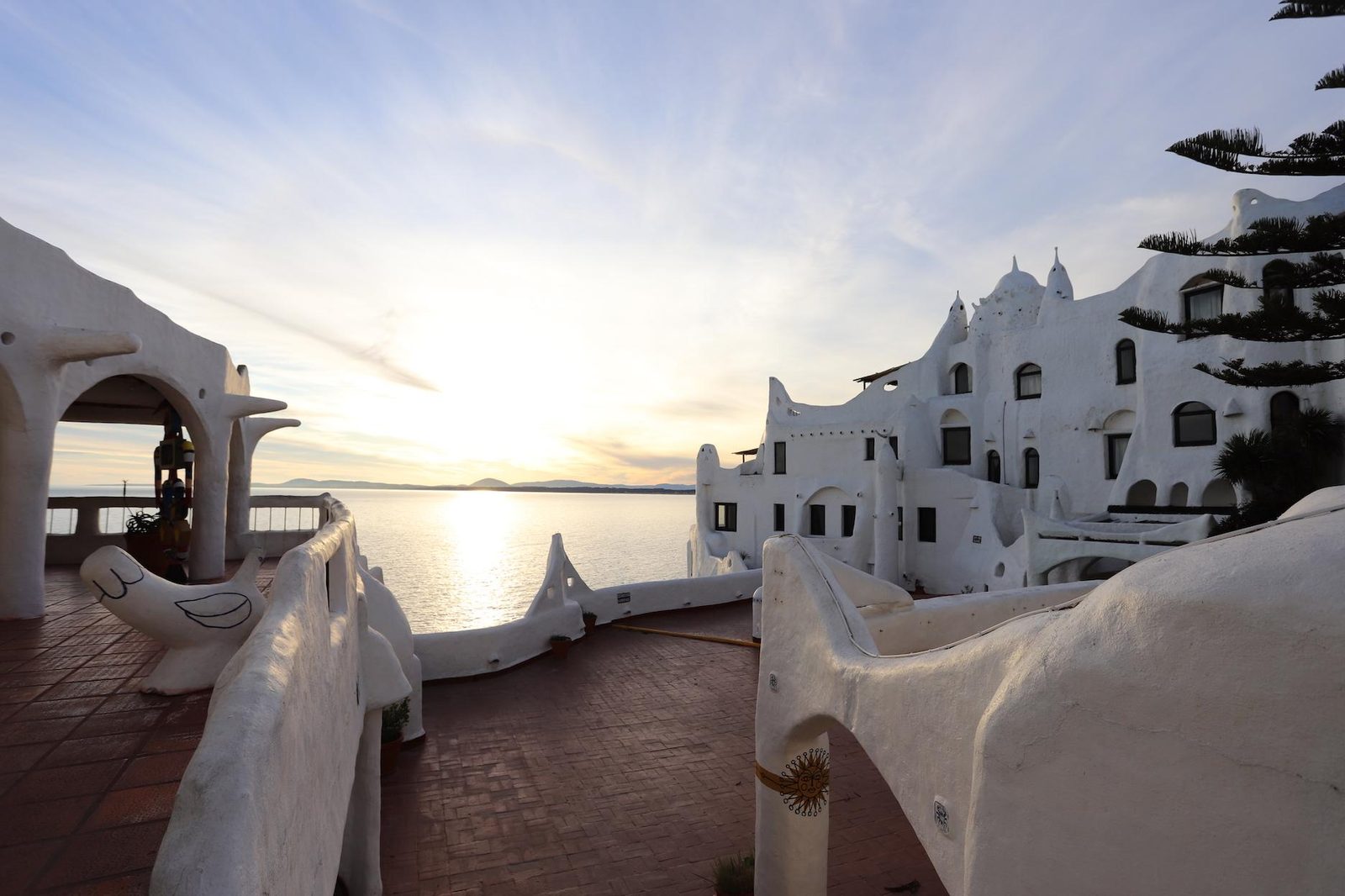
Casapueblo is Carlos Páez Vilaró's greatest work: a thirteen-story habitable sculpture that the artist shaped with his own hands, without blueprints or an architect, on the cliffs of Punta Ballena, about 13 kilometers from Punta del Este. He began it in the late 1950s around a wooden shack and kept sculpting it for more than three decades. Today it operates as a museum-workshop, club hotel and café, and every evening the Ceremony of the Sun is held there, with the artist's own recorded voice bidding farewell to the sunset.
It's the most photographed spot in Uruguay's east, and the story of how it came to exist is better than the postcard. Below, who built it, how, and what you can do today if you come to see it.
From a wooden shack to a livable sculpture
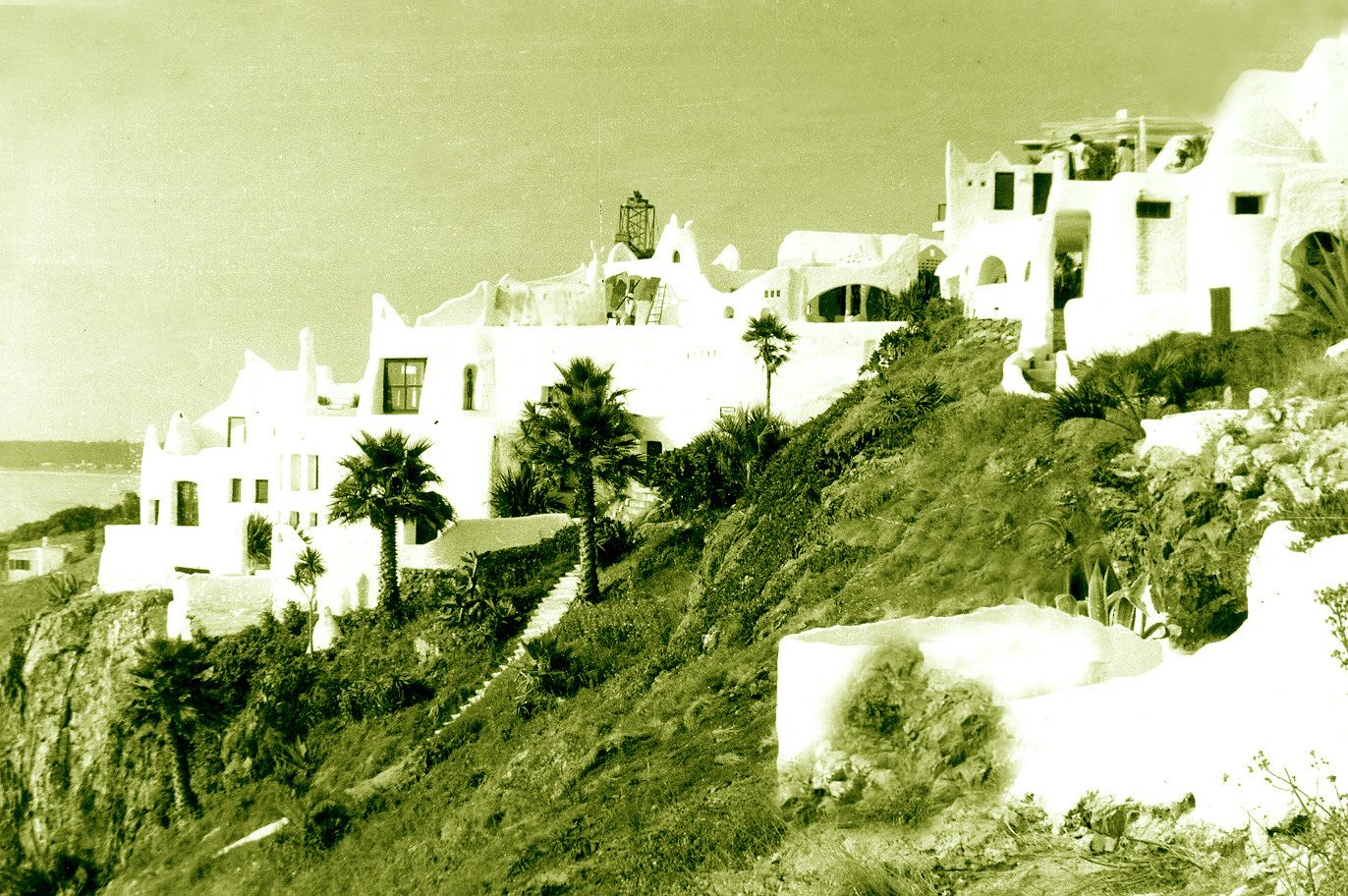
The story begins in 1958, when Páez Vilaró arrived in an almost untouched Punta Ballena: hills, woods and a cliff dropping to the sea. Together with a group of friends, he bought a large stretch of that land and chose for himself a lot perched over the rocks, facing the bay and the sunset. There he built his first studio: La Pionera, a wooden shack put together with planks he gathered from the coast, with help from friends and local fishermen. That was the shelter's original name; the complex that grew around it would later be named Casapueblo.
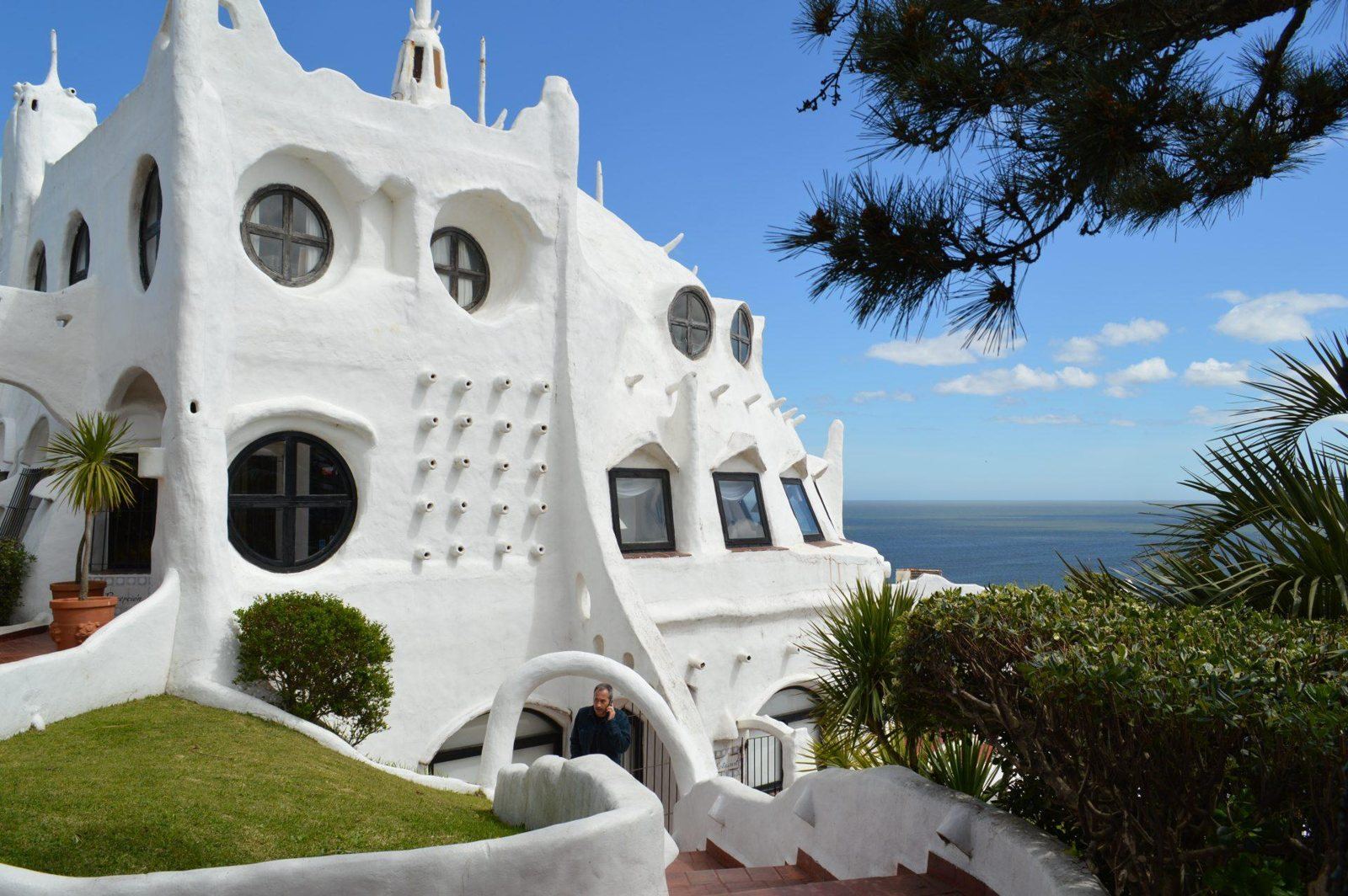
Over the years, that little shack ended up literally wrapped in cement. The artist kept covering it, hand-molding a white structure that grew with no set plan: one room called for another, a dome asked for a terrace, a passageway ended in a lookout. He said he'd built it the way you build a sculpture you can live in, and used to compare it to the hornero's nest, the bird that shapes its home from mud and without blueprints. He also called it his still ship, anchored forever facing the sea.
Thirteen floors sculpted with no blueprints
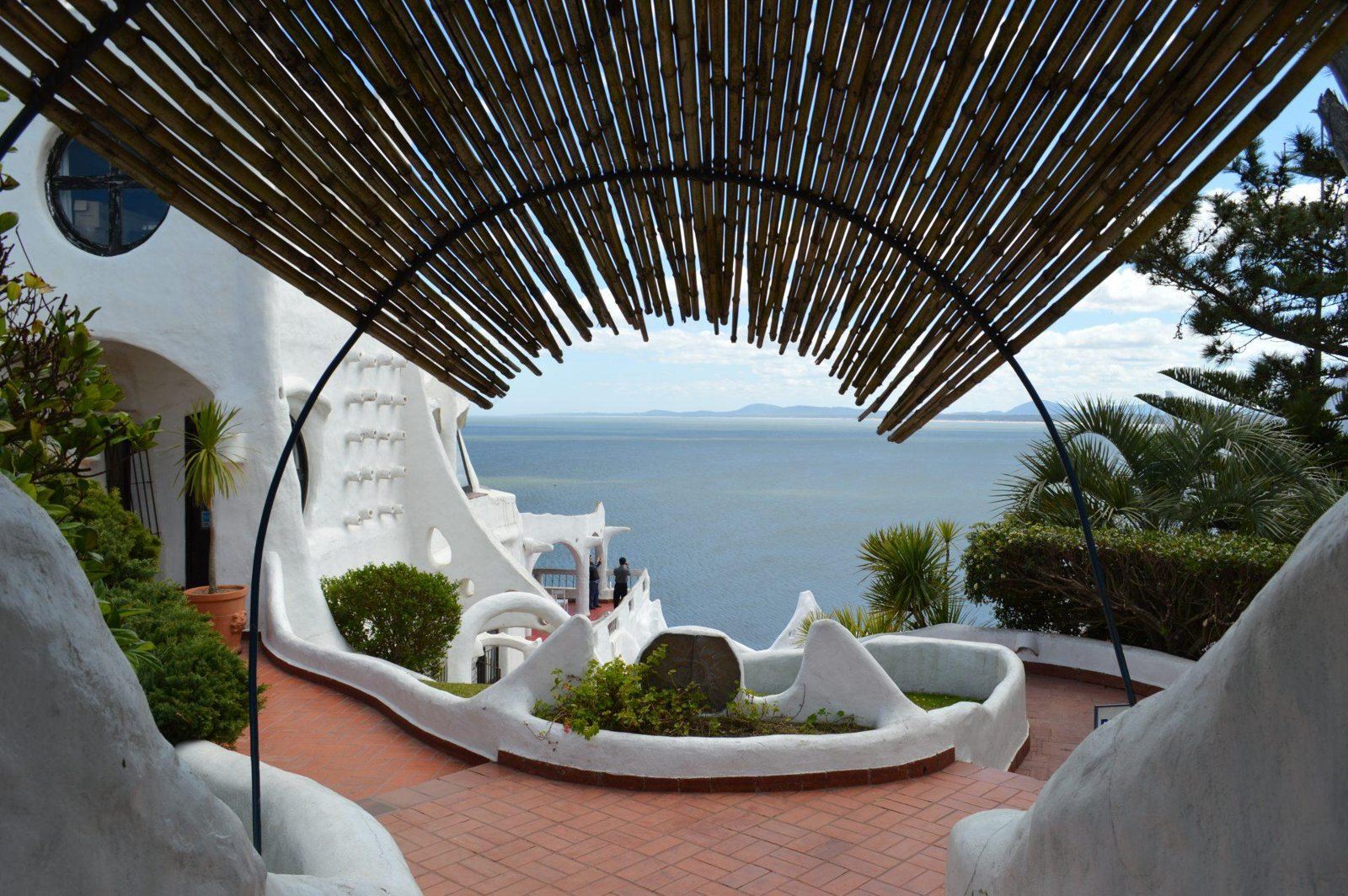
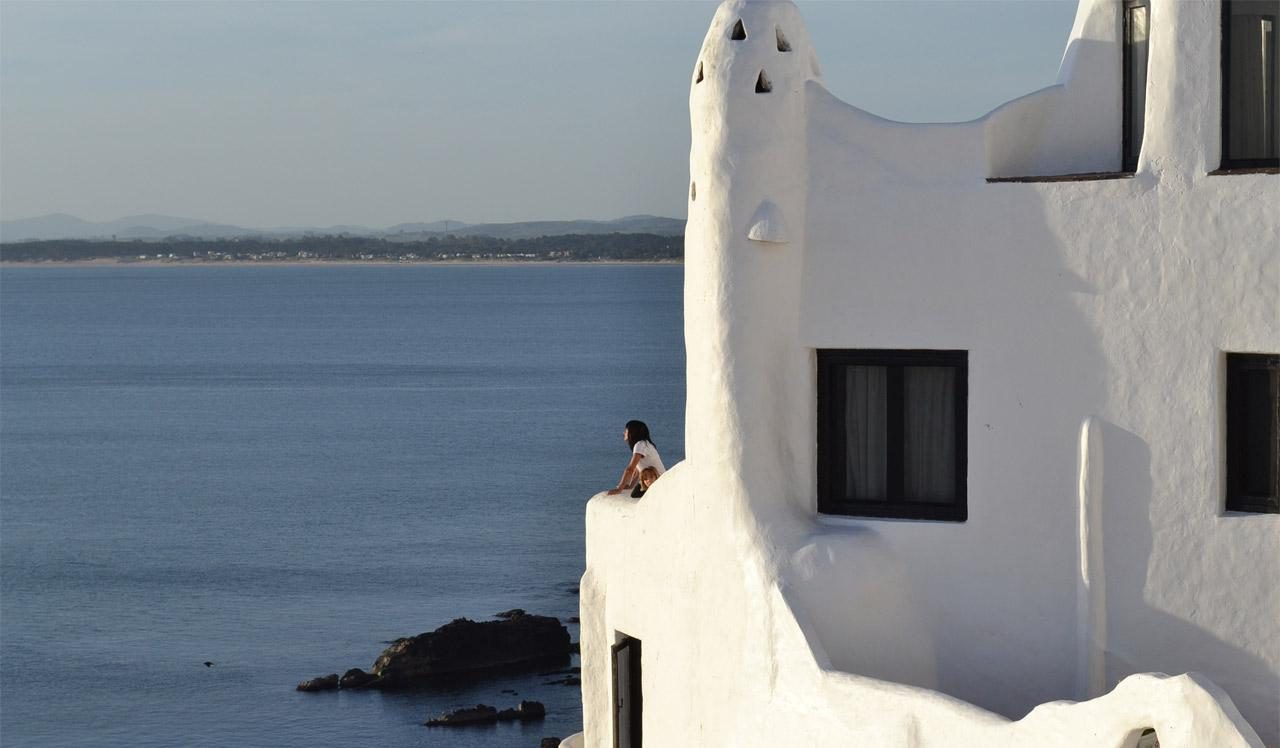
The work took about 36 years. The result is thirteen stepped levels of whitewashed cement, without a single straight line inside: domes, tunnels, winding stairways and west-facing terraces, designed to watch the sun set over the bay. None of it came from an architecture firm: Páez Vilaró drew with his hands directly on the material, corrected, added, started again. The work would stop when the artist went traveling and resume on his return, with new ideas.
In the eighties, part of the complex became a club hotel, which gave the whole thing permanent life and upkeep. That coexistence of museum, hotel and residence is part of its identity: Casapueblo was never a closed-off monument, but a living house. Páez Vilaró himself lived and worked there until the end.
Who was Carlos Páez Vilaró
Born in Montevideo on November 1, 1923, Carlos Páez Vilaró was a painter, ceramicist, sculptor, muralist, writer, and composer: a self-taught artist who made his life a work in motion. As a young man he moved into the Mediomundo tenement house, where candombe and Afro-Uruguayan culture became the heart of his painting. He traveled through Africa painting murals, made films that reached the Cannes Film Festival in 1967, and in 1960 created a mural of about 160 meters in Washington, considered at the time the longest in the world.

Its story also has a chapter that moved the world. In October 1972, the plane his son Carlitos was traveling on crashed in the Andes mountain range. When the official searches were called off, Páez Vilaró kept looking on his own for more than two months, combing the mountains without accepting defeat. Days before Christmas, Carlitos turned up among the sixteen survivors: that father's faith remained forever tied to this white house facing the sea.
Páez Vilaró died in Casapueblo on February 24, 2014, at 90, having worked in the studio until his last days. He was given a state farewell, and his work remained open and running, just as he had imagined it.
Punta Ballena is forest, hills and one of the finest views on the east coast. With more than 20 years in the Punta del Este market, we show you the area's properties calmly and with real data.
What to do today at Casapueblo: museum, hotel and sunset
Casapueblo is open every day of the year, from 10:00 until sunset. Here's what operates today within the building:
What's open at Casapueblo today
Museum-Workshop
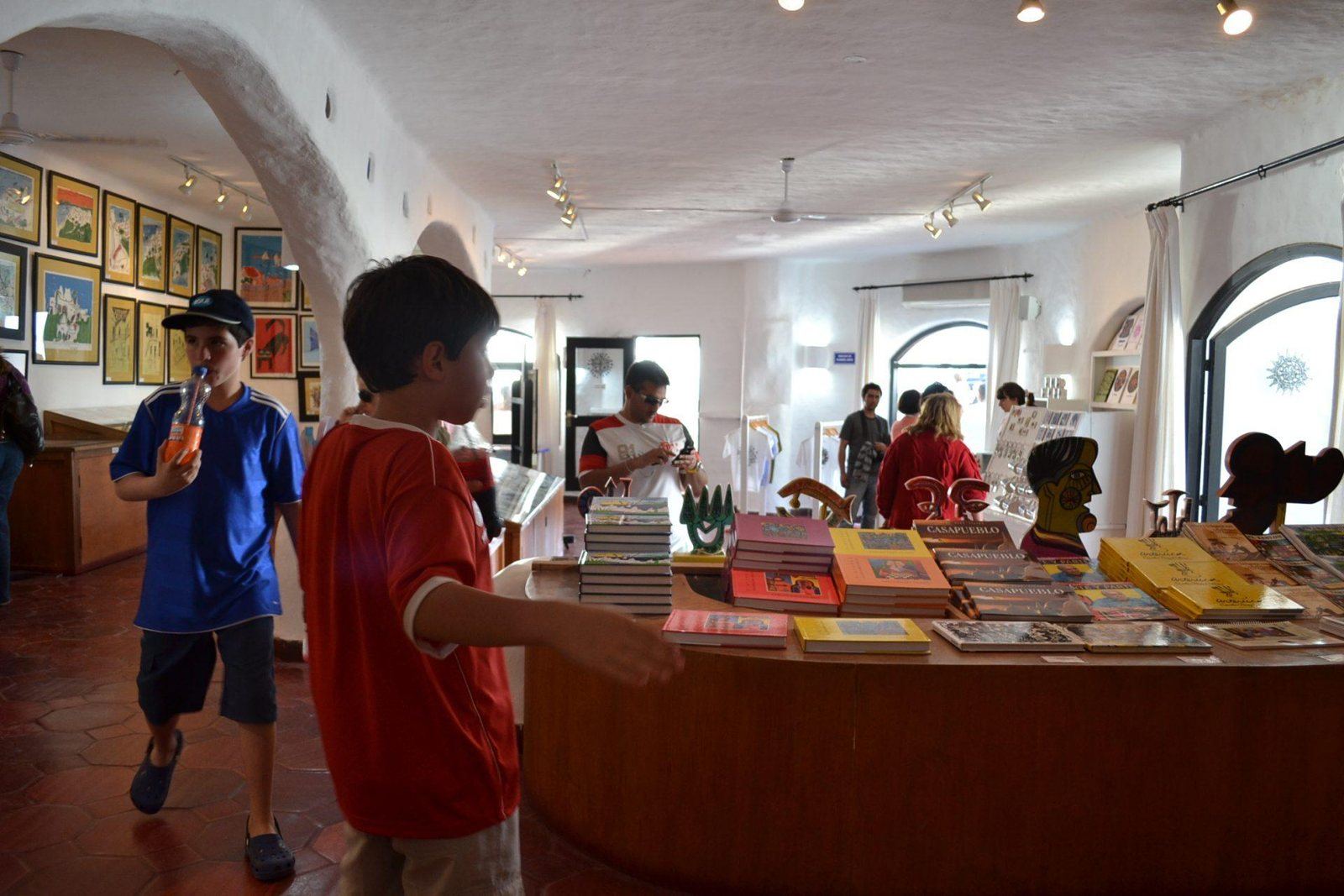
- Rooms with the artist's paintings, ceramics and sculptures, plus a cinema showing documentaries about his life.
- General admission ref. $ 600 Uruguayan pesos; discount for residents and those over 65; under 12 free.
- Punta Ballena, about 13 km from Punta del Este.
Club hotel
- Rooms, suites and apartments inside the sculpture itself.
- Sleeping there is the most complete way to experience the work.
Café and shop
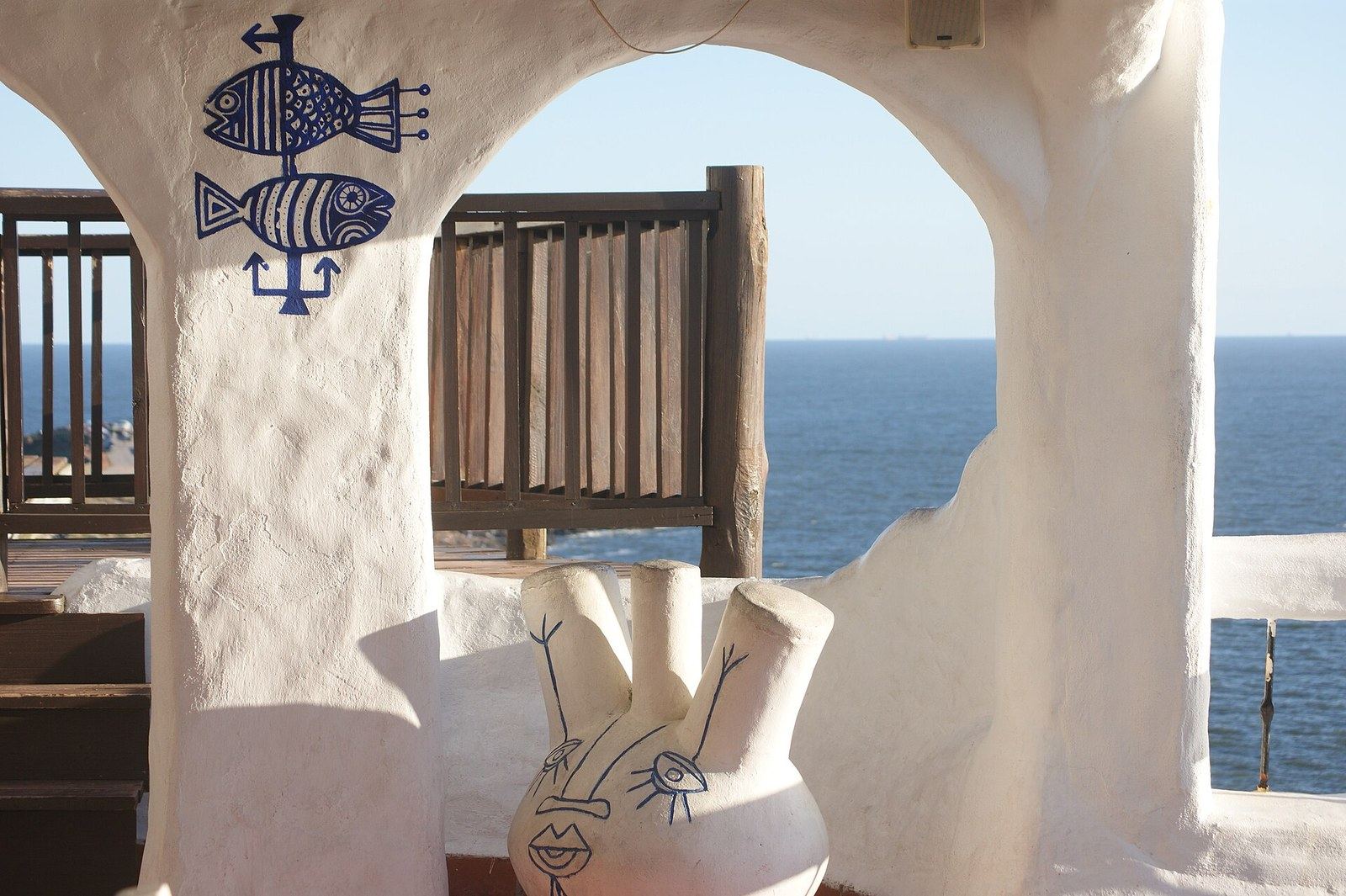
- A dining scene with Taberna del Rayo Verde as the classic, with the sea in the background.
- Museum shop: reproductions, books and items featuring the artist's work.
Sun Ceremony
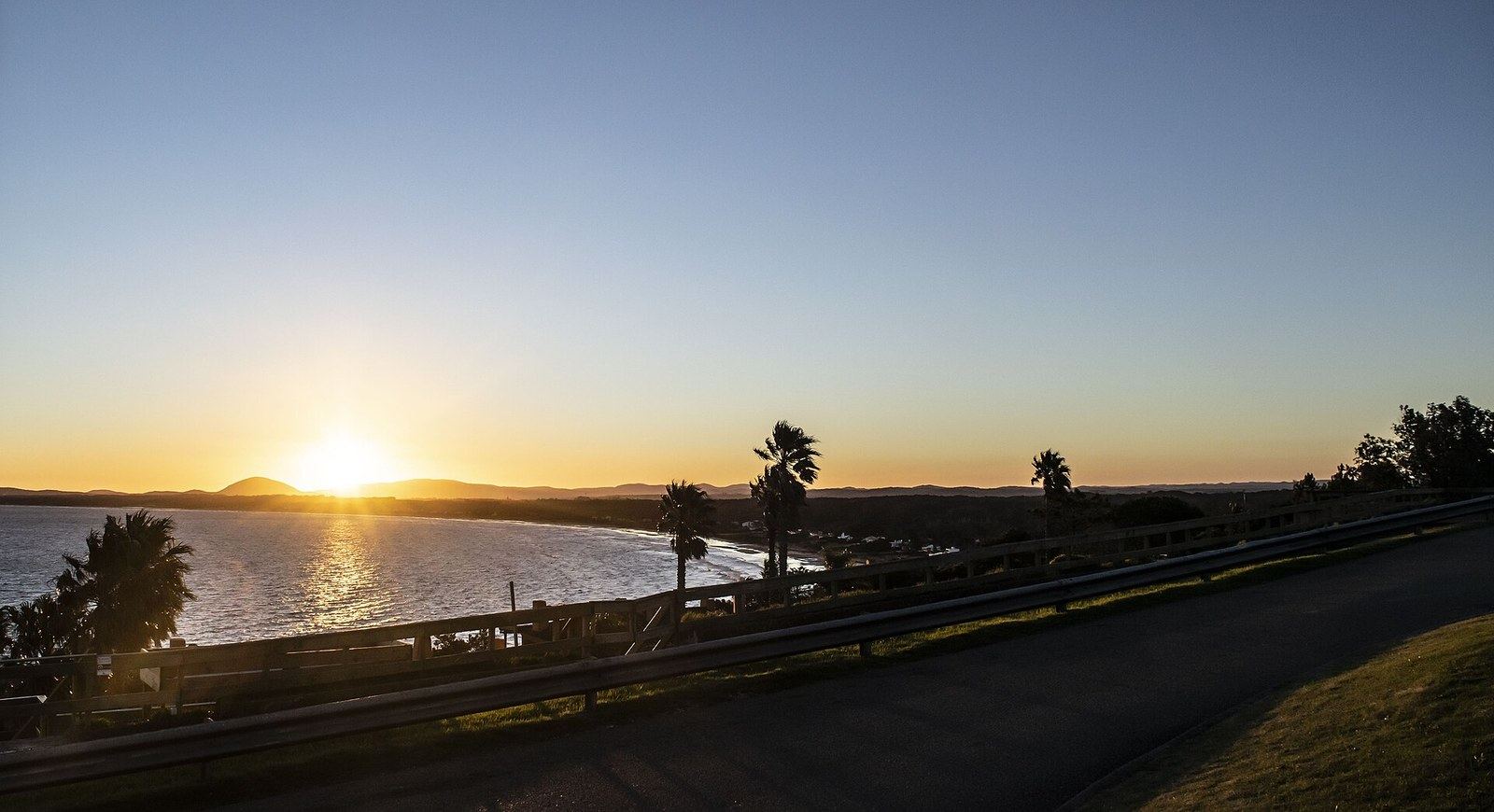
- Every sunset since 1994: a poem in Páez Vilaró's voice bids farewell to the sun.
- Arrive about 40 minutes before sunset.
Reference hours and rates as of July 2026; subject to change without notice.
The Sun Ceremony, every sunset since 1994
The day's most sought-after moment has no fixed time: the sun sets it. Since 1994, every evening, the terraces fill up for the Sun Ceremony: a poem recorded in Páez Vilaró's own voice bids the sun farewell as it sets behind the bay. Brief, moving, unforgettable: get there early to secure a good spot on the railing.
Casapueblo · timeline
- 1958
The plot
Páez Vilaró buys land with friends in Punta Ballena and chooses a plot on the cliff, facing the bay.
- C. 1960
La Pionera
First workshop: a wooden shack built with planks collected from the coast. All of Casapueblo grows from there.
- 36 YEARS OF CONSTRUCTION
The livable sculpture
Thirteen floors of whitewashed concrete, hand-shaped, with no blueprints and no straight lines.
- 1994
Sun Ceremony
The ritual of every sunset begins: a poem in the artist's voice bids the sun farewell from the terraces.
- 2014
Farewell to the creator
Carlos Páez Vilaró dies at Casapueblo on February 24, at the age of 90. His house-studio remains open and active.
- TODAY
Museum · Hotel · Café
Museum-Workshop with exhibit halls and cinema, club hotel, café, and shop. Open every day, from 10:00 until sunset.
What Casapueblo means for Punta Ballena
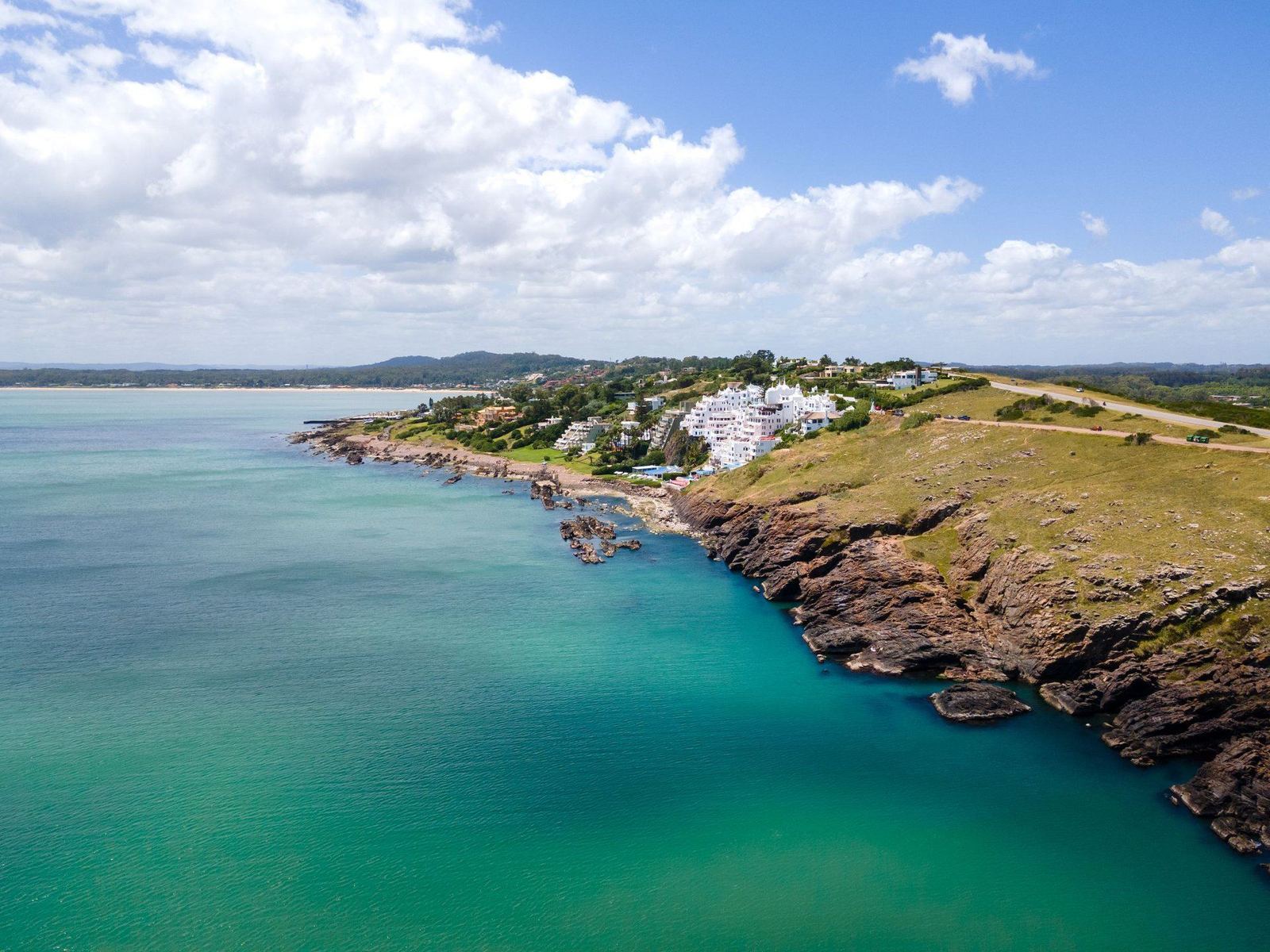
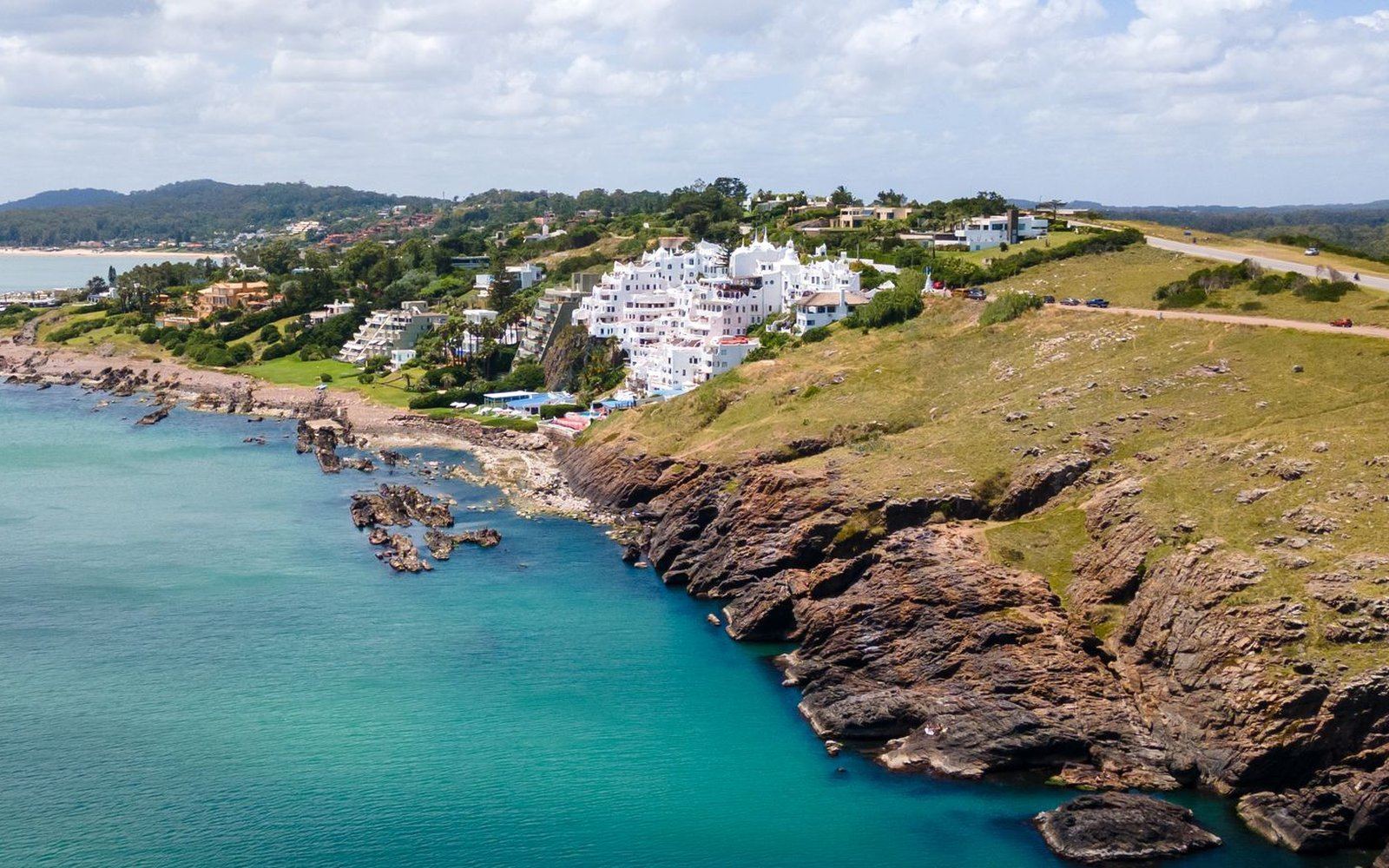
Few places in the world have a landmark like this. Casapueblo put Punta Ballena on the international map and defined its character: a place of forest and hills over the sea, chosen by people looking for nature, quiet and sunsets, fifteen minutes from downtown Punta del Este and minutes from the Laguna del Sauce airport. That mark is felt in the real estate market: houses with bay views are among the most sought-after properties on the east coast, the area is drawing more and more year-round residents, and the stretch from Mansa to Punta Ballena is home to several of the most interesting new projects right now.
For anyone looking at the area with an investor's eye, that identity component matters: places with history and protected scenery hold their value better than those that only have a beach. We cover this in detail in our guide to the best areas to invest in and, if the idea is to relocate, in the guide to relocating to Punta del Este. And if after a Ceremonia del Sol you're still thinking about that bay, that's a good sign: we have houses and apartments with that same view to show you, no rush.
Frequently asked questions
Who built Casapueblo?
Casapueblo was built by the Uruguayan artist Carlos Páez Vilaró (1923–2014). He arrived in Punta Ballena in 1958, first put up a wooden cabin called La Pionera, and from it shaped, with his own hands —without blueprints or an architect— a thirteen-story habitable sculpture that took him around 36 years to build.
What's open today at Casapueblo?
Today Casapueblo brings together the Museo-Taller (Museum-Workshop) of Carlos Páez Vilaró, with exhibition rooms and a screening room showing documentaries about his life; a club hotel section with rooms, suites and apartments; a café and dining offering with sea views, and a museum shop. It's open every day of the year, from morning until sunset.
What is the Ceremonia del Sol?
It's a ritual held every evening since 1994 on the terraces of Casapueblo: at the moment of sunset, a poem recorded in Páez Vilaró's own voice is played, bidding farewell to the sun over the bay. It's best to arrive about 40 minutes before sunset to get a good spot.
Can you visit Casapueblo and stay overnight there?
Yes. The Museo-Taller can be visited every day from 10:00 until sunset, with an affordable entry fee and discounts for residents and seniors; children under 12 don't pay. There's also a club-hotel section that lets you stay inside the work itself, with rooms and apartments facing the sea. The visit pairs very well with a tour of Punta Ballena.
Sources
- Historical archive and timeline of Punta del Este · La Nación
Casapueblo's hours and rates as of July 2026; it's worth confirming before your visit. And if Punta Ballena has really tempted you, write to us: we know every road in the area.